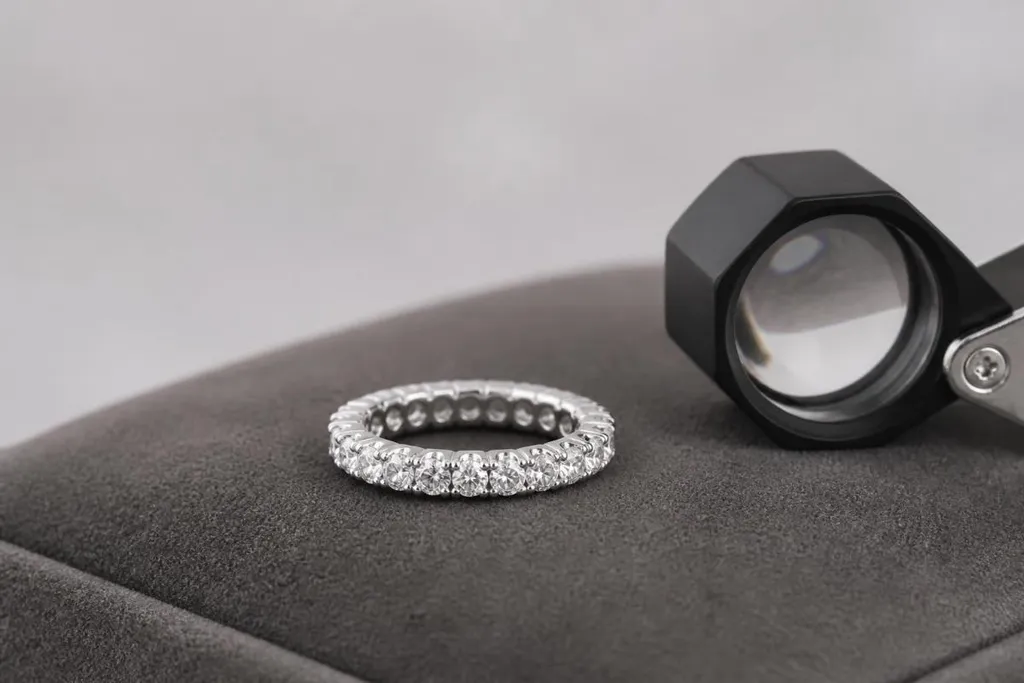
An eternity band can appear wonderfully simple: a sequence of diamonds creating a line of continuous brilliance around the finger. Yet the amount of diamond coverage changes far more than the appearance. Full, half and three-quarter eternity styles differ in comfort, resizing flexibility, visual consistency and how naturally they pair with an engagement ring.
For couples exploring timeless diamond eternity wedding band designs, deciding how far the diamonds should extend around the band is an important starting point. Natural diamonds can create anything from a restrained accent of sparkle to an uninterrupted circle of stones. Rather than assuming maximum coverage is automatically preferable, it is worth considering how each configuration behaves during everyday wear and how it complements the rest of a bridal set.
Full Eternity Bands: Continuous Diamond Presence
A full eternity band places diamonds around the complete circumference of the ring. Its principal advantage is visual consistency. If the ring rotates during wear, diamonds remain visible from every angle rather than exposing a plain section of metal.
This uninterrupted arrangement can be particularly striking when worn alone. It also carries the traditional symbolism of an unbroken circle, which appeals to many couples choosing an eternity-style wedding band.
There are practical considerations, however. With stones and settings extending underneath the finger, a full eternity design can feel more substantial than a plain band. Larger diamonds may also be noticeable between neighbouring fingers.
Sizing deserves careful attention because full eternity rings can be difficult to resize. With little or no plain metal available, altering the circumference may require more complex work and may not be possible for every design.
For someone whose priority is continuous sparkle, these compromises may be entirely worthwhile.
Half Eternity Bands: Practical and Refined
Half eternity bands concentrate diamonds across the upper, visible section of the finger while leaving the lower part of the ring in precious metal.
Visually, this can provide much of the effect of an eternity band when the hand is viewed normally. The diamonds remain prominent from above, yet the plain underside may feel smoother against the palm and everyday surfaces.
This configuration can also offer greater flexibility where future resizing is concerned, depending on the individual construction. For someone purchasing a wedding band expected to be worn daily for decades, that practicality can be valuable.
A half eternity design works particularly well when the engagement ring already has substantial detail. Instead of competing with a large centre stone, halo or heavily diamond-set shoulders, the wedding band contributes a controlled line of brilliance.
It can therefore be the most understated of the three options without feeling visually incomplete.
Three-Quarter Eternity Bands Offer a Middle Ground
A three-quarter eternity band extends diamond coverage farther around the finger than a half band while retaining a smaller section of plain metal.
This makes it an appealing compromise for someone who likes the appearance of near-continuous diamonds but wants to avoid placing stones around the entire underside of the finger.
The additional coverage also means that minor ring rotation is less likely to reveal a large plain section. That can be useful for wearers whose rings naturally move throughout the day.
At the same time, the remaining metal section may provide advantages for comfort or adjustment, although resizing possibilities will always depend on the specific setting.
Three-quarter designs can be particularly effective when worn as standalone rings because they create the impression of almost complete diamond coverage without necessarily introducing all the practical considerations of a full eternity band.
Match Diamond Scale and Setting to the Bridal Set
Coverage is only one part of choosing an eternity ring. Individual diamond size can dramatically change its visual weight.
Smaller natural diamonds create a fine, continuous shimmer and often pair comfortably with delicate engagement rings. Larger stones produce stronger individual flashes and can make the wedding band a major feature in its own right.
Setting style influences the result too. Fine claw settings can expose more of each diamond, while more structured settings introduce additional visible metal and definition.
Metal should also relate naturally to the engagement ring. Platinum and white gold provide a cool backdrop, while yellow or rose gold can create intentional contrast.
Most importantly, check how the two rings physically meet. Settings that continually rub against one another may develop wear over time, so compatible profiles are as important as matching aesthetics.
Final Thought
Full, half and three-quarter natural diamond eternity bands each offer a different balance between brilliance and practicality. Full eternity rings provide uninterrupted diamond coverage, half eternity styles prioritise comfort and flexibility, while three-quarter designs occupy an attractive middle ground.
The strongest choice is not necessarily the one containing the most diamonds. Consider how the ring will rotate, whether future sizing flexibility matters, and how its proportions work beside the engagement ring. An eternity band chosen with those details in mind can deliver lasting sparkle without compromising the qualities that make a wedding ring comfortable to wear every day.